
Guarding Crowded Spaces: How Bollards Ensure Public Safety
Bollards for crowded spaces help protect pedestrians by creating a physical line between vehicles and people. When selected, placed and installed correctly, security bollards can support Hostile Vehicle Mitigation, reduce vehicle intrusion risks and help create safer pedestrian zones in public spaces, transport hubs, government sites and high-security facilities.
Crowded places need to remain open, accessible and welcoming. At the same time, infrastructure owners, city planners, security consultants and facilities teams must consider how vehicles could accidentally or deliberately enter pedestrian areas. This is where public safety bollards play an important role.
What Are Bollards for Crowded Spaces?
Bollards for crowded spaces are fixed, removable, automatic or crash-rated posts used to manage vehicle movement, protect pedestrians and define safe zones in busy public or private areas. In a Hostile Vehicle Mitigation plan, bollards help reduce the risk of vehicle-based threats while still allowing people, emergency teams and authorised vehicles to move safely.
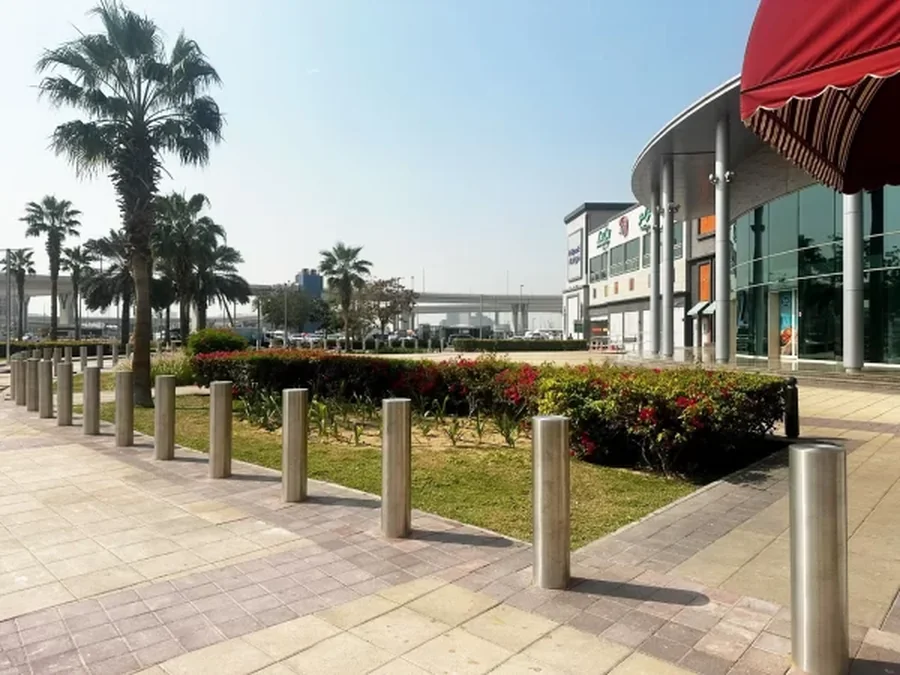
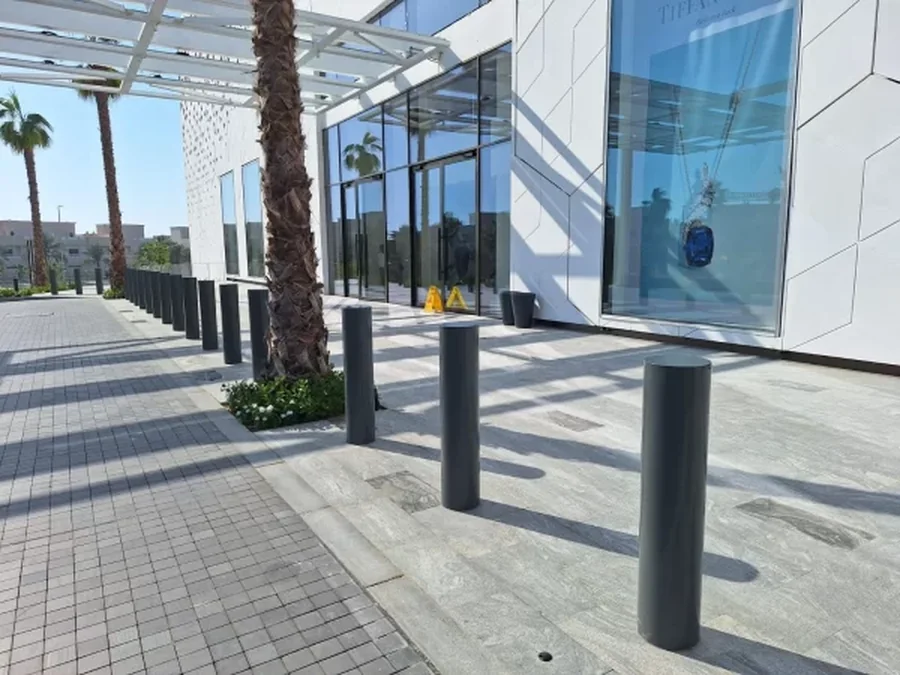
In simple terms, bollards are not only street furniture. Security bollards are part of physical security solutions that can guide traffic, separate pedestrian areas from vehicle routes and support crowded spaces security.
For high-risk locations, standard decorative posts may not be enough. Crash-rated bollards or HVM bollards may be required when the site needs tested protection against vehicle impact. ISO 22343-1:2023 specifies impact performance requirements and a test method for vehicle security barriers used to protect people in public or private locations from vehicle attacks.
Why Public Safety Bollards Matter
Crowded spaces are attractive, busy and often complex. Airports, stadiums, logistics centres, oil and gas facilities, embassies, government buildings, military bases, public squares and transport hubs all manage a mix of people, vehicles and operational requirements.
The risk is not limited to deliberate attack. Vehicle intrusion can also happen because of driver error, poor road layout, uncontrolled access, weak perimeter planning or temporary event conditions.
Hostile Vehicle Mitigation, or HVM, is the security discipline focused on reducing risks linked to vehicle-borne threats, including vehicles used as weapons or vehicles used to ram infrastructure. ProtectUK describes HVM as a risk-based approach informed by threat, vulnerability, consequence and the needs of the owner requiring protection.
For crowded locations, bollard safety measures can help:
- Protect pedestrian queues and gathering areas
- Control vehicle access near entrances
- Reduce direct vehicle approach routes
- Separate foot traffic from traffic lanes
- Support urban safety and city security planning
- Protect critical infrastructure without closing the site
How Bollards Support Hostile Vehicle Mitigation
Hostile Vehicle Mitigation is not simply “installing bollards.” A good HVM strategy starts with the threat, the site layout and the operational need.
A vehicle can be used to breach a perimeter, damage infrastructure or harm people in crowded places. ProtectUK notes that vehicle-as-a-weapon attacks have targeted crowded places and publicly accessible locations.
Bollards support Hostile Vehicle Mitigation by creating a physical barrier line at vulnerable points. These points may include:
- Main entrances
- Drop-off zones
- Pedestrian plazas
- Stadium approaches
- Airport terminal fronts
- Government building perimeters
- Utility and energy infrastructure entrances
- Public event access points
- Areas where vehicles can mount footways or enter pedestrian zones
NPSA guidance also notes that vehicle-as-a-weapon attacks can occur anywhere a vehicle can access, including pavements, pedestrian-only areas, event spaces and the perimeter of critical national infrastructure.
Crash-Rated Bollards vs Standard Bollards
Not every bollard performs the same function. The right choice depends on risk level, access requirements, foundation conditions and the performance objective.
| Bollard Type | Best Use | Main Benefit | Important Consideration |
|---|---|---|---|
| Decorative bollards | Low-risk public realm areas | Visual guidance and traffic separation | Not a substitute for tested vehicle impact protection |
| Fixed security bollards | Permanent pedestrian protection | Strong physical separation | Requires careful spacing and foundation planning |
| Removable bollards | Occasional vehicle access | Flexible access for events or maintenance | Requires secure locking and operating procedures |
| Automatic bollards | Controlled vehicle entry | Allows authorised vehicle access | Needs power, controls, safety systems and maintenance |
| Crash-rated bollards | High-risk and HVM locations | Tested vehicle impact resistance | Must match the tested rating, foundation and site threat |
IWA 14-1 bollards are still commonly referenced in project discussions because IWA 14-1 was widely used for vehicle security barrier performance testing. However, ISO lists IWA 14-1:2013 as withdrawn and revised by ISO 22343-1:2023. For new specifications, project teams should confirm which standard, test notation and performance requirement apply.
Key Benefits of Bollards in Crowded Spaces
1. Pedestrian Protection
The primary purpose of bollards for crowded spaces is pedestrian protection. Bollards can help keep vehicles away from queues, walkways, building entrances and outdoor gathering areas.
2. Vehicle Intrusion Prevention
Security bollards can help prevent unauthorised vehicles from entering pedestrian zones, restricted roads and protected perimeters. In higher-risk settings, crash-rated bollards provide tested resistance against defined vehicle impact conditions.
3. Better Traffic Control
Bollards help drivers understand where vehicles should and should not go. Good bollard placement supports traffic control without relying only on signs, cones or painted road markings.
4. Safer Urban Security Planning
Urban security planning must balance safety, access and visual quality. Bollards can be integrated with landscaping, lighting, wayfinding and public realm design so security does not make the space feel closed or hostile.
5. Stronger Perimeter Security
For airports, government buildings, utilities and logistics sites, bollards form part of perimeter security. They help protect vulnerable edges while supporting access control points, road blockers, gates and surveillance systems.
Bollard Placement: What to Consider
Bollard placement is one of the most important parts of a successful public space security plan. Poor placement can reduce protection, block accessibility or create operational problems.
Before installing bollards, review:
- Vehicle approach speed and direction
- Vehicle mass and threat scenario
- Pedestrian volume and movement patterns
- Emergency vehicle access
- Wheelchair and stroller access
- Underground utilities and drainage
- Finished surface and foundation depth
- Security control room procedures
- Maintenance requirements
- Integration with gates, barriers, CCTV and lighting
A bollard line should not create confusion. The protected side, vehicle side and authorised access points must be clear to drivers, pedestrians and security teams.
Step-by-Step Guidance for Planning Bollards
- Define the protected area.
Identify the people, buildings, queues, entrances or assets that need protection. - Assess the vehicle threat.
Consider vehicle type, likely approach route, speed, impact angle and whether the concern is accidental intrusion, unauthorised access or hostile vehicle attack. - Map pedestrian and vehicle movement.
Study how people walk, queue, enter, exit and cross vehicle routes during normal and peak conditions. - Choose the correct bollard type.
Use fixed bollards for permanent protection, removable bollards for occasional access, automatic bollards for controlled entry and crash-rated bollards for tested HVM performance. - Check standards and test ratings.
Confirm whether the project requires PAS 68, IWA 14-1, ISO 22343-1 or another recognised test reference. - Review foundations and site constraints.
Match the bollard system to the actual ground conditions, underground services and available excavation depth. - Plan access and emergency response.
Ensure emergency vehicles, maintenance teams and authorised users can access the site when required. - Install, test and maintain the system.
Bollard installation should be followed by handover documentation, training and a planned maintenance schedule.
Real-World Example
Consider a large public venue with a busy entrance plaza. Visitors arrive by taxi, bus, private vehicle and on foot. At peak times, queues extend toward the kerb line, delivery vehicles use a nearby service road and security teams must keep emergency routes available.
In this scenario, public safety bollards can help create safe pedestrian zones in front of the venue. Crash-rated bollards may be specified where a direct vehicle approach presents a higher risk. Removable or automatic bollards may be used where authorised vehicles require controlled access.
The final design should not rely on bollards alone. A complete plan may include traffic management, signage, CCTV, lighting, trained security staff, emergency response procedures and clear operating rules.
Common Mistakes to Avoid
The most common mistake is choosing bollards based only on appearance. A bollard that looks strong may not be tested for vehicle impact.
Another mistake is using a crash rating without checking the full test classification. A proper specification should review vehicle mass, impact speed, penetration distance, foundation type and installation arrangement.
Project teams should also avoid placing bollards where they block accessibility, create trip hazards, restrict emergency response or conflict with underground utilities.
Simple Bollard Planning Checklist
Use this checklist before finalising a bollard specification:
- Has the vehicle threat been documented?
- Is the protected area clearly defined?
- Are pedestrian routes still accessible?
- Is emergency access maintained?
- Is the required crash rating clearly written?
- Is the foundation suitable for the tested system?
- Are underground services checked?
- Is the bollard spacing appropriate?
- Are operating procedures documented?
- Is maintenance included in the project plan?
Frequently Asked Questions
What are bollards for crowded spaces?
Bollards for crowded spaces are physical posts used to separate vehicles from pedestrians in busy areas. They support public safety by guiding traffic, protecting pedestrian zones and helping reduce vehicle intrusion risks.
How do bollards support Hostile Vehicle Mitigation?
Bollards support Hostile Vehicle Mitigation by creating a tested or defined barrier line against vehicle threats. In high-risk areas, HVM bollards or crash-rated bollards should be selected based on the documented vehicle threat and recognised test standards.
Are all security bollards crash-rated?
No, not all security bollards are crash-rated. Some bollards are designed for visual guidance, parking control or low-speed access management, while crash-rated bollards are tested against defined vehicle impact conditions.
What is the difference between IWA 14-1 bollards and ISO 22343-1 bollards?
IWA 14-1 bollards refer to products tested under the older IWA 14-1 vehicle security barrier standard. ISO now lists IWA 14-1:2013 as withdrawn and replaced by ISO 22343-1:2023, so new specifications should confirm the correct standard and test notation.
Where should public safety bollards be installed?
Public safety bollards should be installed where vehicles could enter pedestrian areas, building entrances, public plazas, event spaces, transport hubs or high-security perimeters. Placement should be based on vehicle approach routes, pedestrian flow and operational access needs.
Do bollards affect pedestrian safety and accessibility?
Yes, bollards can improve pedestrian safety when placed correctly, but poor placement can obstruct movement. Good bollard placement must consider wheelchair access, stroller movement, visibility, spacing and emergency routes.
Are bollards enough to secure a crowded space?
No, bollards are only one part of crowded spaces security. A stronger plan may include traffic control, road blockers, gates, CCTV, lighting, trained staff, emergency procedures and regular maintenance.
Who should specify HVM bollards?
HVM bollards should be specified by qualified security consultants, engineers or experienced perimeter security specialists. The specification should be based on threat assessment, site conditions, operational requirements and recognised testing standards.
Conclusion
Bollards for crowded spaces are an important part of public safety, pedestrian protection and Hostile Vehicle Mitigation. When properly specified, bollards can help reduce vehicle intrusion risks, improve traffic control, strengthen perimeter security and support safer public spaces.
The best results come from planning. Infrastructure owners, government agencies, private sector operators, security consultants and facilities teams should select bollards based on risk, standards, site conditions and long-term operation.
Frontier Pitts Middle East supports public space security, perimeter security and HVM planning with bollards, blockers, barriers, gates and physical security solutions for high-security environments. To discuss bollard placement, crash-rated bollards or Hostile Vehicle Mitigation requirements, visit www.fpgulf.com.
Follow Frontier Pitts Middle East on Google
Add fpgulf.com as a Preferred Source to see more of our latest insights on hostile vehicle mitigation, security bollards, road blockers and high-security access solutions in Google Search.