
Heavy-Duty Security Solutions for Heavily Guarded Infrastructure
Hostile vehicle mitigation is the discipline of stopping a vehicle before it reaches people, buildings, or critical assets and it now relies on a single unified international standard, ISO 22343-1:2023, rather than the regional PAS 68 and IWA 14-1 specifications it replaced in September 2023. At Frontier Pitts Middle East, we protect critical infrastructure oil and gas sites, government buildings, and transport hubs across the UAE and Middle East from vehicle-based threats using hostile vehicle mitigation (HVM) systems: crash-rated bollards, road blockers, and security gates independently tested to stop vehicles from 3.5 to 7.5 tonnes at speeds up to 50mph.
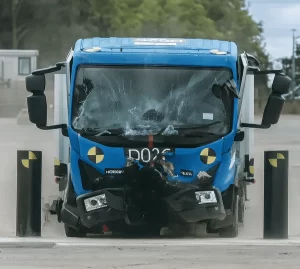
Crash-rated bollard are impact-tested against real vehicles to prove they stop a hostile vehicle before it breaches a secured perimeter.
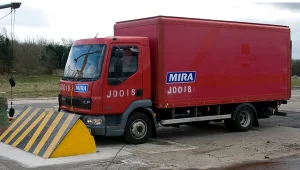
Crash-rated road blockers are impact-tested against real vehicles to prove they stop a hostile vehicle before it breaches a secured perimeter.
What Counts as Heavy-Duty Security for Critical Infrastructure?
Heavy-duty security is built from three core layers: bollards that hold a fixed perimeter, road blockers that control vehicle access points, and gates that manage who enters a site. On their own, each layer solves a specific problem. Together, they close the gaps a single barrier type leaves open, which is why oil refineries, government buildings, and high-traffic urban sites rarely rely on just one solution.
Understanding PAS 68, IWA 14-1, and the New ISO 22343-1:2023 Standard
For over a decade, PAS 68 and IWA 14-1 were the two most widely referenced vehicle security barrier standards worldwide, each defining how a bollard, gate, or blocker is tested against a real vehicle impact. In September 2023, the International Organization for Standardization published ISO 22343-1, unifying both standards into a single global framework. As of March 2024, the UK’s National Protective Security Authority recognizes only ISO 22343-1 for new vehicle security barrier testing, though products already tested to PAS 68 or IWA 14-1 remain valid and continue to provide proven performance evidence. We test our Terra range to these internationally recognized specifications, giving site planners a consistent, comparable way to evaluate protection levels regardless of which standard a specific product was certified under.
Bollards: The First Line of Defense
Bollards are the most visible and versatile layer of infrastructure security. Our Terra Quantum Bollard is PAS 68 tested to stop a 7.5-tonne vehicle at 30mph, with a side-folding, shallow-depth design that retrofits into existing PAS 68 bollard lines without major groundworks. The Terra Static Mars Bollard, PAS 68 tested to 7.5 tonnes at 64kph, is SIRA-certified, confirming compliance with Dubai’s regulatory framework for physical security systems. The Terra Shallow Venus Bollard offers the same 7.5-tonne PAS 68 rating at 48kph with a reduced foundation depth, making it well suited to sites with buried utilities or limited excavation space.
Road Blockers for Controlled Access Points
Where bollards protect a perimeter, road blockers manage a single controlled entry point, rising and lowering flush with the road surface. The Terra Blocker is PAS 68 tested to stop a 7.5-tonne vehicle at 30mph, with an operational cycle of 4 to 6 seconds and full interfacing with existing access control systems. For higher-risk checkpoints, the Terra Ultimate Barrier is PAS 68 tested to 7.5 tonnes at 50mph, while the Terra Compact Barrier offers a lighter-footprint 3.5-tonne, 30mph rating for sites where a discreet, aesthetically minimal barrier is the priority.
High-Security Gates and Turnstiles
Gates and turnstiles govern who and what physically enters a site. The Terra G8 Gate is independently impact tested to the IWA 14-1 specification, securing vehicle apertures at guarded entrances. For pedestrian access, the Terra Diamond Turnstile carries an LPS 1175 security rating of 3 and 4 and is approved for government use, while our Platinum range of automatic anti-intruder security gates is LPS 1175 rated 2 and 3, proven to withstand forcible manual attack. Pairing a vehicle-rated gate with an intruder-rated turnstile closes both the vehicle and manual-attack threat vectors at the same entry point.
Comparing Frontier Pitts Terra Range Solutions
| Solution | Standard | Rating | Best Suited For |
|---|---|---|---|
| Terra Ultimate Barrier | PAS 68 | 7.5t @ 50mph | High-risk vehicle checkpoints |
| Terra Blocker | PAS 68 | 7.5t @ 30mph | Controlled access points |
| Terra Quantum Bollard | PAS 68 | 7.5t @ 30mph | Retrofitting existing bollard lines |
| Terra Static Mars Bollard | PAS 68, SIRA-certified | 7.5t @ 64kph | Fixed perimeter protection |
| Terra G8 Gate | IWA 14-1 | Apertures up to 10m | Vehicle access control |
| Terra Diamond Turnstile | LPS 1175 | Rated 3 & 4, government-approved | Pedestrian access, government sites |
Real-World Applications Across the Region
Our HVM systems have supported protection at some of the region’s most significant developments, including Al-Masjid an-Nabawi in Madinah, teamLab Phenomena Abu Dhabi, and Pure Data Centre. Each project reflects the same layered approach: bollards and barriers securing the perimeter, gates and turnstiles managing controlled access, all tested to internationally recognized standards before a single unit reaches site.
Practical Guidance for Site Planners
When specifying heavy-duty security, start with a risk assessment to determine required vehicle mass and speed ratings, then layer solutions rather than relying on a single barrier type. Match the standard to the threat: PAS 68, IWA 14-1, or ISO 22343-1 for vehicle impact, and LPS 1175 for manual intrusion resistance. Confirm foundation depth and site conditions early, since shallow-foundation options like the Terra Quantum and Terra Venus bollards can significantly simplify installation on sites with buried utilities.
Frequently Asked Questions
What’s the difference between a road blocker and a bollard for infrastructure security?
A road blocker rises and lowers flush with the road for controlled vehicle entry points, while a bollard is a fixed or retractable post better suited to permanent perimeter protection. Sites often deploy both — blockers at checkpoints, bollards along the perimeter — for layered coverage.
Has ISO 22343-1:2023 replaced PAS 68 and IWA 14-1?
Yes. ISO 22343-1:2023 superseded both PAS 68 and IWA 14-1 when published in September 2023, and as of March 2024 it’s the only standard the UK’s National Protective Security Authority recognizes for new vehicle security barrier testing. Products already tested to PAS 68 or IWA 14-1 remain valid and don’t require retesting.
How much weight and speed can a crash-rated bollard stop?
Crash-rated bollards in active service typically stop vehicles ranging from 3.5 to 7.5 tonnes at speeds up to 50mph, depending on the model and its impact rating. The exact classification specifies the tested vehicle mass, speed, and approach angle.
What certifications should a security gate for critical infrastructure have?
For vehicle-facing gates, look for PAS 68, IWA 14-1, or ISO 22343-1; for gates defending against forced pedestrian entry, LPS 1175 is the relevant intruder-resistance rating. Government-grade sites typically require both, since vehicle and manual attack are separate threat vectors.
Why do oil and gas facilities need layered HVM systems instead of a single barrier type?
A single barrier type protects against one threat vector, while layering bollards, gates, and blockers closes gaps a single system leaves, including manual attack, credential misuse, and vehicle ramming at multiple approach angles. This is standard practice at high-value sites where a single point of failure isn’t an acceptable risk.
Conclusion
Securing heavily guarded infrastructure comes down to matching the right combination of bollards, road blockers, and gates to the specific risk a site faces, all tested to standards that are independently verifiable. As the industry transitions to ISO 22343-1:2023, we continue manufacturing and testing our Terra range to the standards that give site planners confidence proven performance, clear certification, and layered protection built for the realities of critical infrastructure across the UAE and Middle East
Ready to Secure Your Critical Infrastructure?
From crash-rated bollards to high-security gates, we design HVM systems built for the UAE and Middle East toughest sites.
Get a Quote →
Follow Frontier Pitts Middle East on Google
Add fpgulf.com as a Preferred Source to see more of our latest insights on hostile vehicle mitigation, security bollards, road blockers and high-security access solutions in Google Search.