
LPS 1175 Turnstile Guide for High-Security Sites UAE
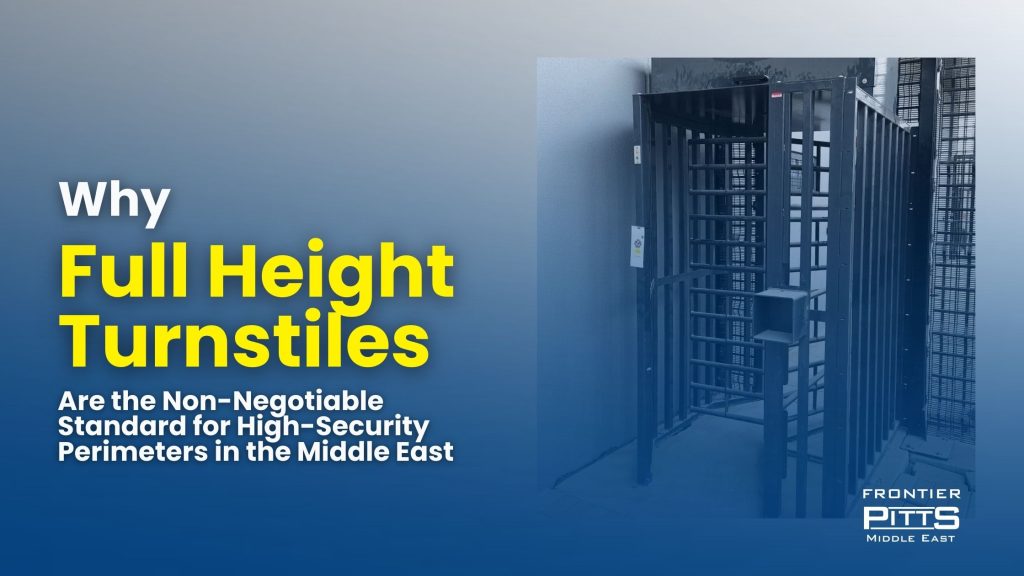
Why Full Height Turnstiles Are the Non-Negotiable Standard for High-Security Perimeters in the Middle East
The definitive answer: A full height turnstile is a floor-to-ceiling, physically hardened access gate that controls pedestrian entry one person at a time. For government sites, critical national infrastructure, ports, and utility facilities across the UAE, KSA, and Oman, it remains the most effective single-point perimeter control measure available — particularly when certified to internationally recognised attack resistance standards like LPS 1175.
At Frontier Pitts Middle East, we’ve specified, supplied, and commissioned turnstile solutions across the region — from data centres in Abu Dhabi to power substations in Oman and port facilities in Sohar. What we consistently find: the sites that invest in certified, properly integrated full height turnstiles experience fewer forced entry incidents, cleaner access audit trails, and lower long-term security staffing overhead.
Here’s what facilities teams, government security leads, and infrastructure consultants in the Middle East need to know before specifying.
What Problem Does a Full Height Turnstile Actually Solve?
Most perimeter breaches don’t involve cutting fences. They happen at the controlled points — the pedestrian gates where staff, contractors, and visitors enter. A full height turnstile addresses three specific failure modes simultaneously:
- Unauthorised walk-through: The full-height rotor physically blocks passage without a valid credential. Unlike tripod turnstiles or waist-height barriers, it cannot be stepped over or ducked under.
- Tailgating: With the right lane layout and monitoring, a full height turnstile forces single-file, one-credential-per-entry discipline. This is the most common gap in access control that perimeter security solutions need to close.
- Audit trail gaps: Every approved rotation is logged. Entry time, credential ID, and lane number are captured automatically — critical for post-incident investigation and regulatory compliance.
What it does not solve on its own: a turnstile is one layer. Strong perimeter security solutions combine certified turnstile hardware with fencing, surveillance, vehicle mitigation, and operational policy.
The Standard That Separates Specification-Grade from Off-the-Shelf: LPS 1175
Not all full height turnstiles are equal. For government agencies, critical infrastructure operators, and high-security commercial sites, the benchmark in the UK and increasingly across the Gulf region is LPS 1175 — the Loss Prevention Standard for physical attack resistance, maintained by the LPCB (Loss Prevention Certification Board).
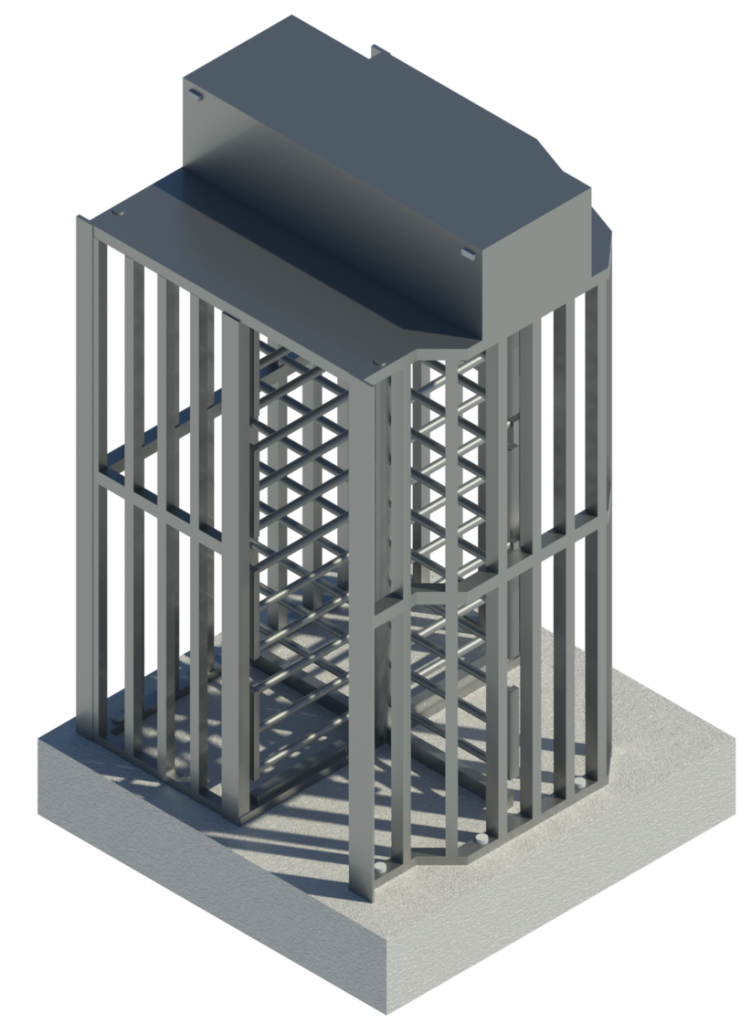
At Frontier Pitts Middle East, our LPS 1175 Platinum Turnstile B3 carries LPS 1175 Issue 8, Security Rating B3 — and it is the world’s first LPS 1175 Security Rated Turnstile with a 120° rotor (3-section walkway). It is Red Book Listed, meaning it appears on the LPCB’s publicly verified register of tested and certified products.
What LPS 1175 B3 Certification Means in Practice
| Feature | What It Means for Your Site |
|---|---|
| LPS 1175 Issue 8, Security Rating B3 | Independently tested and certified resistance to physical attack using defined tools and timeframes |
| Red Book Listed | Verifiable on the LPCB register — not a self-declared claim |
| CPNI Approved Integration | Meets Centre for the Protection of National Infrastructure guidelines for fence line integration |
| Power Locking Bolt | Remains locked under breach attempt; does not yield to forced rotation |
| Fail-Secure Design | Stays locked on power loss — the right default for perimeter security |
| Fully Welded Steel Cage + High-Security Mesh | Short walkway design makes unauthorised bypass near-impossible |
For national and local government procurement teams evaluating turnstile manufacturers in UAE, LPS 1175 certification is the clearest way to compare products on verified performance rather than marketing claims.
Where Full Height Turnstiles Belong: A Site-Type Guide
1. Government and Public Sector Facilities
Ministry compounds, judicial buildings, utilities control centres, and municipal infrastructure sites require access control that discourages breach attempts on appearance alone and documents every entry for compliance. A certified full height turnstile does both.
2. Ports, Logistics Hubs, and Free Zones
Staff pedestrian lanes beside vehicle gates are a common vulnerability. During shift changes at busy logistics facilities — a scenario we’ve addressed at Sohar Port in Oman — a full height turnstile with RFID keeps the vehicle lane clear while giving security a clean, auditable pedestrian stream.
3. Utilities and Energy Infrastructure (UAE, KSA, Oman)
Remote or partially staffed substations and processing facilities benefit from unmanned turnstile lanes integrated with intercom and CCTV. A single-lane full height turnstile with camera coverage allows a remote control room to manage exceptions without leaving the perimeter exposed.
4. Data Centres and Secure Commercial Facilities
For colocation providers and enterprise data centres, LPS 1175 rated turnstile solutions offer tenants and auditors a verifiable, internationally recognised standard — not a vendor-specific rating.
How to Specify the Right Turnstile: A Step-by-Step Framework
Step 1 — Classify the location: Perimeter or interior? Outdoor or conditioned space? Staffed or unmanned?
Step 2 — Quantify peak flow: Identify your busiest 15-minute window (usually shift change). Divide expected entries by 15 to get entries-per-minute. A single full height lane typically handles 8–12 people per minute under normal conditions.
Step 3 — Determine your security rating requirement: For government and critical infrastructure, LPS 1175 certification (B3 or above) should be a baseline specification requirement, not an optional upgrade.
Step 4 — Plan the integration: RFID card, biometric reader, QR/visitor management, or combination? Also define: alarm events (forced entry, reverse rotation, rotor jam), operator override path (guard desk or control room), and emergency egress coordination with life-safety systems.
Step 5 — Specify for the environment: The Middle East operating environment is demanding. Coastal sites in the UAE need corrosion-resistant finishes and higher IP-rated enclosures (rated under IEC 60529). Desert sites need dust management plans and scheduled cleaning cycles for drive mechanisms. Confirm spare parts availability and local service support before finalising supplier selection.
Step 6 — Plan for wide-access requirements: Full height rotors are not suitable for wheelchairs, carts, or oversized equipment. Always specify an adjacent controlled swing gate for compliant wide-access passage.
Full Height vs. Speed Gates vs. Tripod Turnstiles: When to Use Each
| Factor | Full Height Turnstile (LPS 1175 B3) | Speed Gate | Tripod Turnstile |
|---|---|---|---|
| Best location | Perimeter / outdoor checkpoints | Indoor lobbies | Low-risk interior zones |
| Physical attack resistance | High (certified) | Low | Low |
| Tailgating deterrence | Strong (with correct layout) | Moderate | Lower |
| Throughput | Medium (8–12/min) | High | Medium |
| Outdoor suitability | Yes (spec-dependent) | Rarely | Rarely |
| Certification available | LPS 1175 B3 (Red Book Listed) | Not typically | Not typically |
| User experience | Industrial / secure | Premium / corporate | Basic |
The right choice is the one matched to the threat profile and location. We’re one of the few turnstile manufacturers in UAE offering the full spectrum — from LPS 1175 certified full height turnstiles to speed gates — so we have no commercial reason to default every site to the same product.
Common Specification Mistakes (and How to Avoid Them)
Underestimating peak queue depth. If the approach lane is too short, queues spill into vehicle traffic or public space. Model your worst-case 15 minutes before fixing lane quantity.
Specifying indoor-grade equipment for outdoor lanes. Corrosion, sticking rotors, and control failures are the predictable result. Confirm IP ratings and material finishes are appropriate for coastal or desert environments before procurement.
Ignoring reader placement. Poor reader ergonomics create hesitation and slow throughput. Position readers at natural reach height with clear directional signage and LED entry indicators.
No plan for wide access. Personnel with equipment, mobility aids, or oversized loads will attempt to force the rotor if there’s no alternative. A controlled adjacent swing gate is not optional — it’s part of a complete lane design.
Frequently Asked Questions
What is LPS 1175 and why does it matter for turnstile selection? LPS 1175 is the Loss Prevention Standard for Intruder Resistant Building Components, maintained by the LPCB. It defines tested resistance ratings (SR1 through SR6, and A–E in Issue 8 terminology) based on attack tool type and time. For perimeter security in critical infrastructure, specifying an LPS 1175-rated turnstile means you can evidence due diligence with a third-party verified, internationally recognised test result.
What does fail-secure mean on a turnstile? Fail-secure means the rotor locks on power loss rather than opening. This is the correct default for perimeter security applications. Fail-safe (unlocks on power loss) may be appropriate for specific interior egress scenarios — the right configuration depends on the site’s life-safety design and local authority guidance.
Can a full height turnstile be integrated with biometric readers? Yes. Our LPS 1175 Platinum Turnstile B3 columns are designed to accommodate card readers, biometric readers, and QR-based visitor management systems. The integration approach should be defined at specification stage, not retrofitted.
Are full height turnstiles suitable for outdoor use in the UAE and Oman? Yes, when correctly specified. The critical variables are enclosure IP rating (under IEC 60529), material and finish choice for coastal or desert conditions, and a documented maintenance plan. Frontier Pitts Middle East provides site-specific guidance on outdoor specification for Gulf environments.
The Bottom Line
For any facility where perimeter access control is a genuine security requirement — not just a compliance checkbox — a certified full height turnstile remains the most defensible specification choice available. LPS 1175 certification gives procurement teams, security managers, and government clients a tested, verifiable performance standard to work from.
At Frontier Pitts Middle East, we are a trusted turnstile supplier Middle East teams have relied on for certified, climate-appropriate perimeter security solutions across the UAE, Oman, and the wider Gulf. Our LPS 1175 Platinum Turnstile B3 is the only Red Book Listed, CPNI-approved 120° rotor turnstile available in the region.
To discuss your site’s access control requirements or download the product catalogue, contact our Abu Dhabi team at fpgulf.com.
Frontier Pitts Middle East | Office 1301, Building C88, Commercial Tower A, 15 Baghdad St, Abu Dhabi, UAE | +971 26212272 | sales@frontierpitts.ae